
Prague: One Perfect Day as an Architecture Fanatic
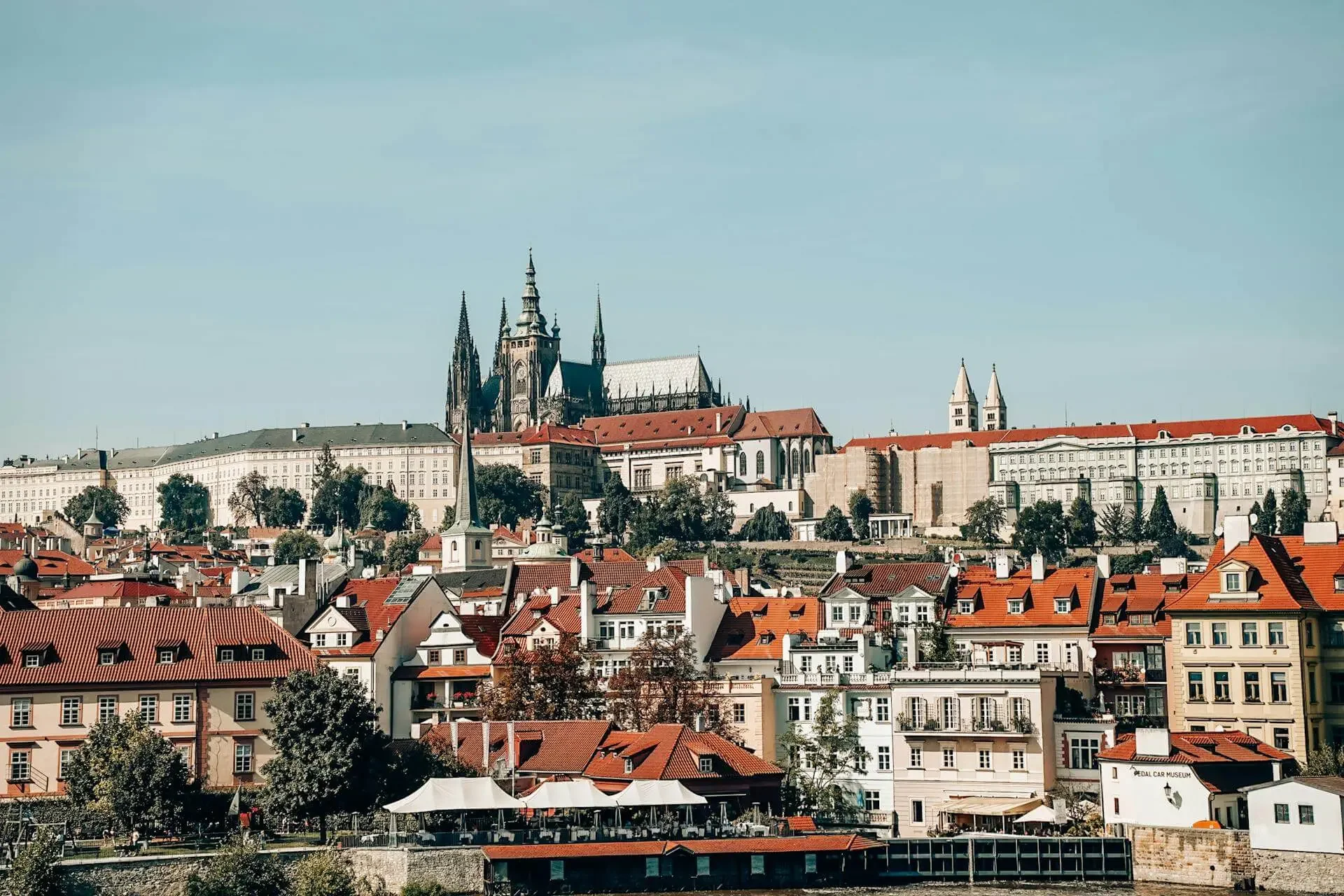
I like this view because it flattens the city into a texture. You get the red of the roof tiles against the gray stone of the spires—it’s the cleanest way to see the “plan view” of the Old Town.
Many visitors treat Prague like a museum: static and crowded. We’re going to treat it like a living architectural evolution. This day is organized by era and quality of light, moving from Neo-Renaissance grandeur to minimalist modernism. I’ve mapped it out this way so you can actually enjoy the city's history at a human pace without feeling a part of the tourist treadmill.
Morning - The Morning Light
The Legion Bridge & Breakfast at Café Savoy
Depending on your hotel, you might stroll across the Legion Bridge to get to Cafe Savoy. We start here for the Neo-Renaissance architecture and the Savoy Breakfast for a proper meal to start your day on the right foot. I’ve chosen this spot so you can enjoy the grandeur of 1893 before the Vltava’s West Bank wakes up, using the café’s quiet morning to set the tone for your day.
The Walk to Prague Castle
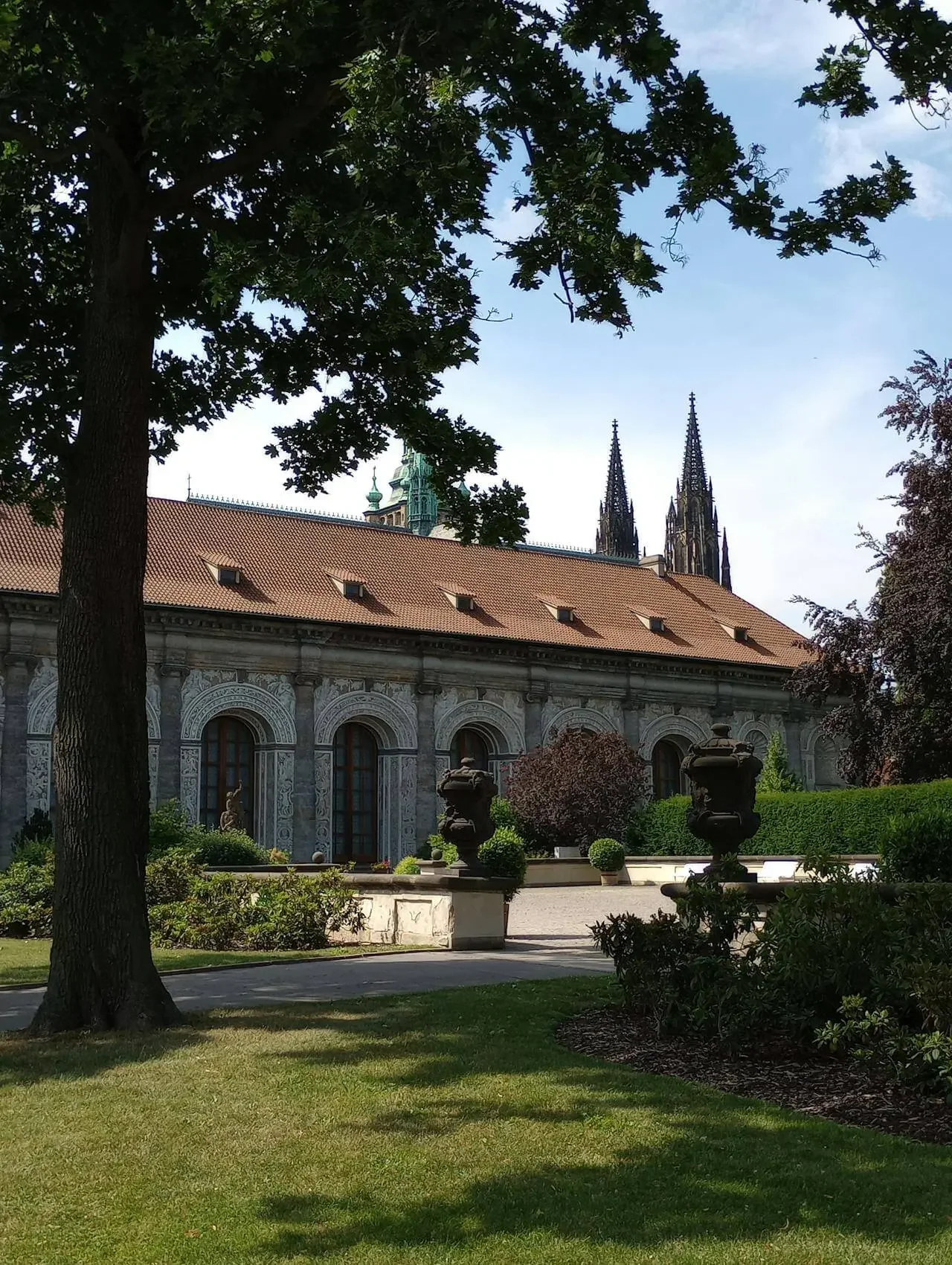
From breakfast, walk through Malá Strana toward the Castle. Keep an eye out for the Wallenstein Garden to see the Grotto Wall, a 17th-century mix of architecture and artificial nature. Then, head up Nerudova Street to look at the house signs above the doors. It’s a great way to see how the city was mapped before house numbers existed. As you walk, you can see the city’s transition from Baroque gardens to the Gothic scale of St. Vitus Cathedral and the Vladislav Hall while the streets are still quiet.
The Old Castle Stairs & The Charles Bridge
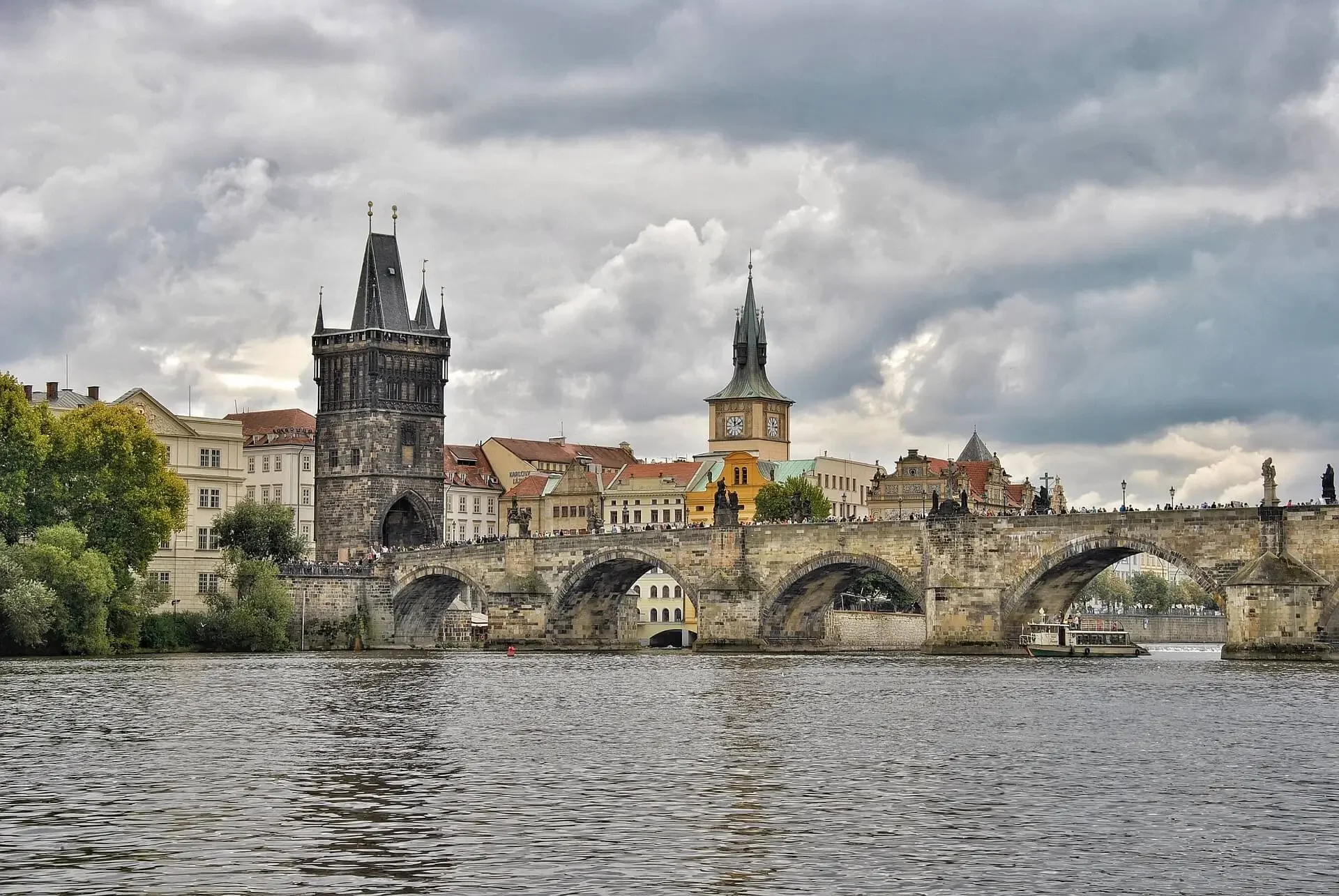
Leave the Castle complex by the Old Castle Stairs (the east) so you can see the full panorama of Prague’s red-tiled roofs as you walk back down toward the river. From there, it’s a short stroll to the Charles Bridge. At this time day, just before lunch, you can catch the street musicians and see the statues in the late morning light. The Bridge is the city’s most iconic crossing, and timing it right after the Castle keeps the morning’s momentum going before the midday rush.
Afternoon - Contrast & Context
Liberica Café
On your way from the bridge to the Jewish Quarter, stop at Liberica Café. Grab a quick espresso in a quiet, brick-walled space that feels tucked away from the main tourist flow. It’s a great reset, and a chance to see a more neighborhood-focused side of the district before you head into the history of the synagogues.
Jewish Quarter
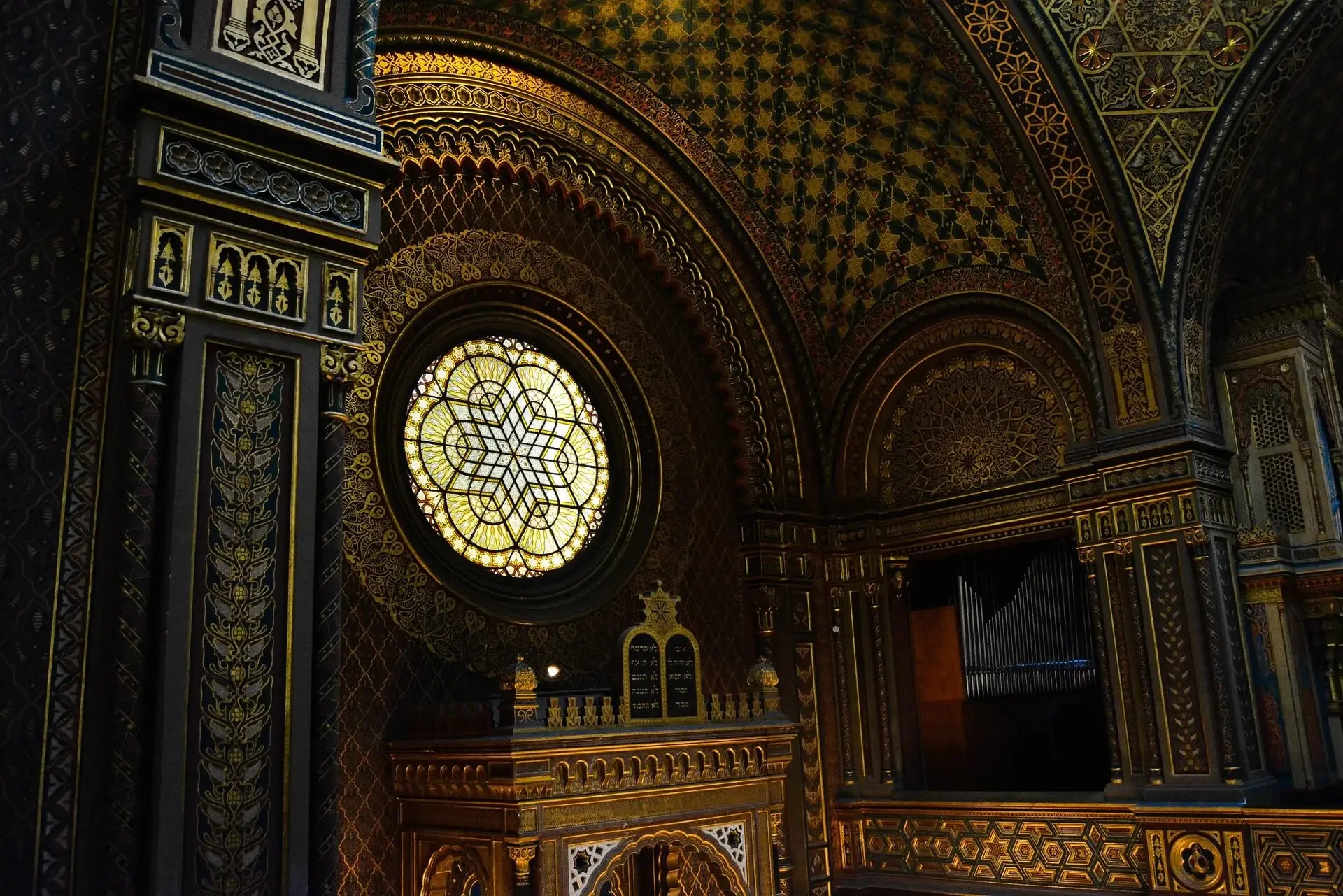
Well-caffeinated, meet the local private guide that I arrange for you. it’s time to visit the Jewish Quarter to see the Old Cemetery and the Spanish Synagogue. You can really get into the history of these spaces. The Old Cemetery is an interesting lesson in city planning, and the Spanish Synagogue is incredible inside.
I’ll arrange for you to meet your local private guide here for an in-depth look at the district. I’ve selected this specific tour so you can get a technical, architectural perspective on how the neighborhood was cleared and rebuilt at the turn of the century. Instead of a generic history lesson, your guide will focus on the structural details—like the Gothic vaulting of the Old-New Synagogue and the intricate Moorish Revival interior of the Spanish Synagogue—giving you the context you need before the afternoon crowds arrive.
Lunch at Lokál
It’s a short walk from the Jewish Quarter to Lokál. This industrial-feel restaurant is a great stop for Czech classics and fresh, local food. It’s loud, social, and exactly the kind of place to show you what Prague is really like.
The Old Town Square
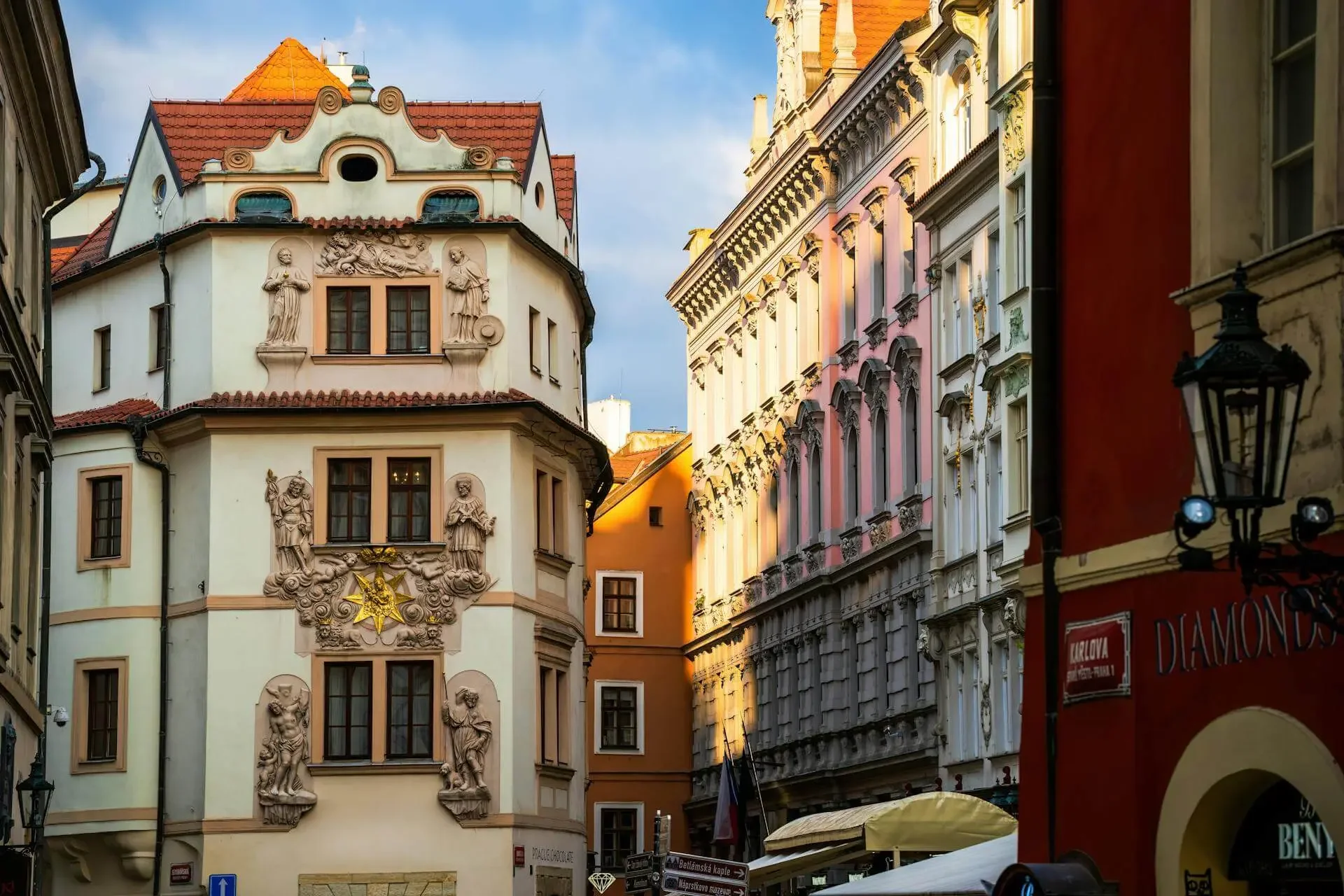
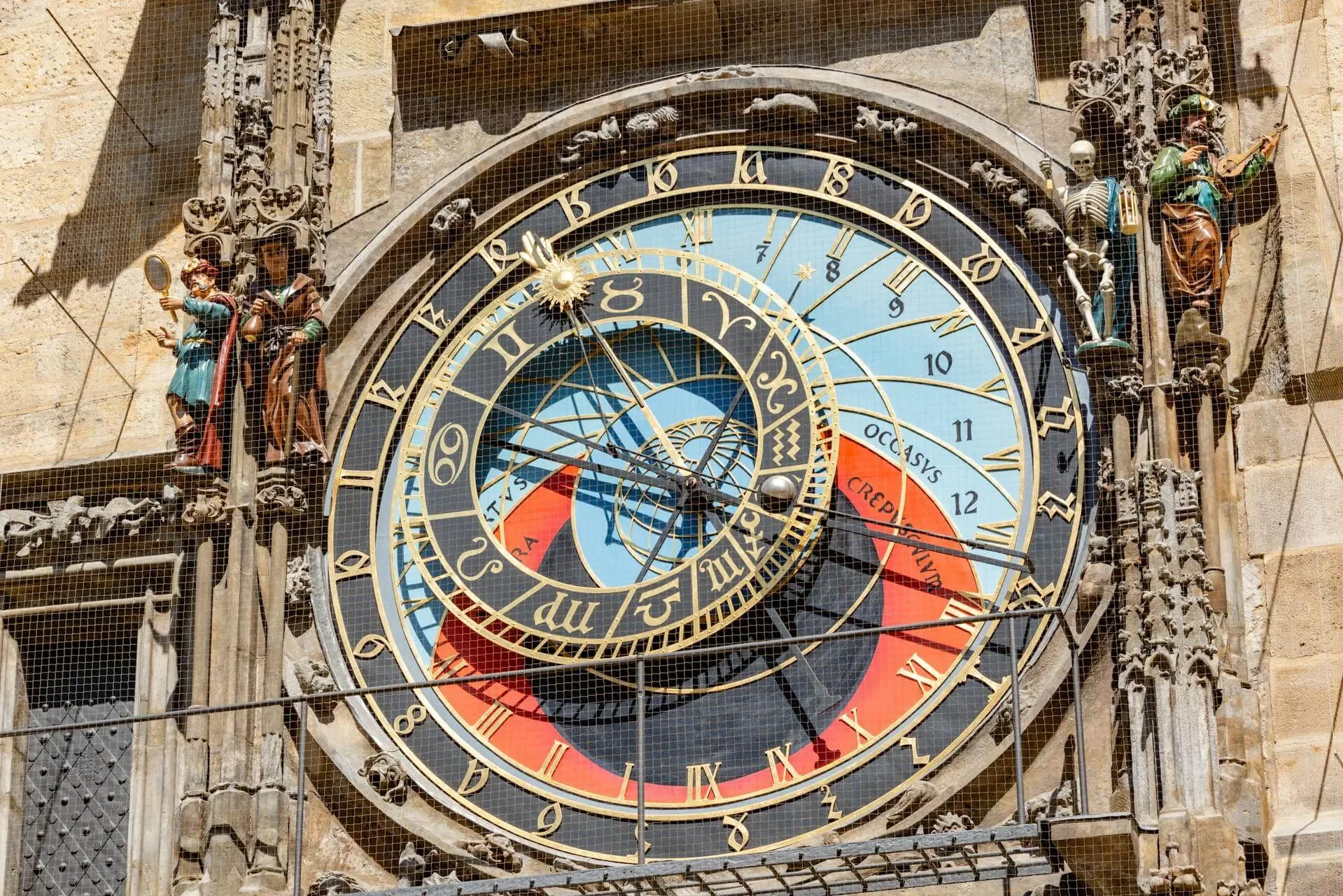
After lunch, walk the short distance to the Old Town Square. Here is where you’ll find one of the most fascinating architectural views that tell the story of Prague. Gothic towers of Týn Church on one side and the Baroque St. Nicholas on the other. The Astronomical Clock is interesting to see on the hour, but the best part is just the scale of the square. Even with the crowds, you have to stand in the middle of it at least once to understand how the city was built to impress.
Evening - Golden Hour
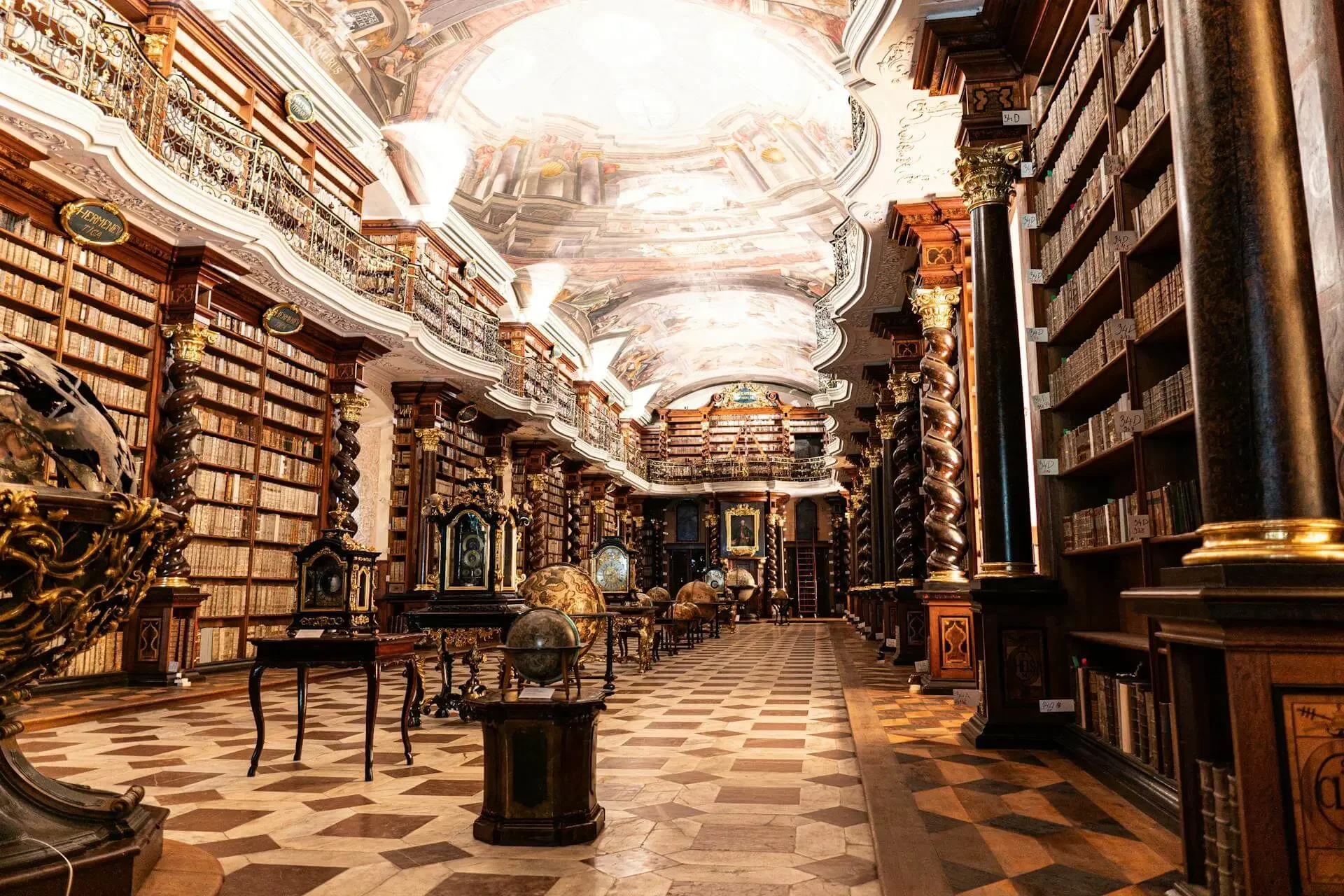
Most people come here for the books, but look at the columns. The Baroque period was obsessed with movement, and this room is one of the best examples of how they used wood and paint to make a static space feel like it’s shifting.
Klementium
After passing through the Old Town Square, visit the Klementinum, one of the largest building complexes in Europe. Here, you can experience the transition from the public chaos of the square to the silent, awe-inspiring Baroque Library Hall, a perfect study in how 18th-century design uses interior volume to command respect.
Letná Park
Hop on a tram and head across the river to Letná Park just before sunset. I suggest getting out of the dense Old Town core at this time of day so you can watch the sun go down over the bridges from a distance. It’s a wide-open view that shows the scale of the city, and it’s the best spot to just sit for a minute to catch your breath and see how all the places you've walked through actually fit together.
Dinner at Kampa Park Restaurant
End the day with dinner at Kampa Park, right on the water’s edge. If you’re hungry, the grilled lobster or the beef tenderloin are the way to go. This spot is a calm environment to watch the lights of the Charles Bridge reflect off the river. It’s the best place to order a Pilsner and see the city from a different perspective.
Prague deserves more than one day.
Prague is more than a backdrop; it is a complex layering of centuries of design. To truly see it, you need an itinerary that respects the flow of space and the quality of light. If you want your next journey built with this level of architectural precision, let’s start designing your full itinerary.
